The Great Artesian Basin
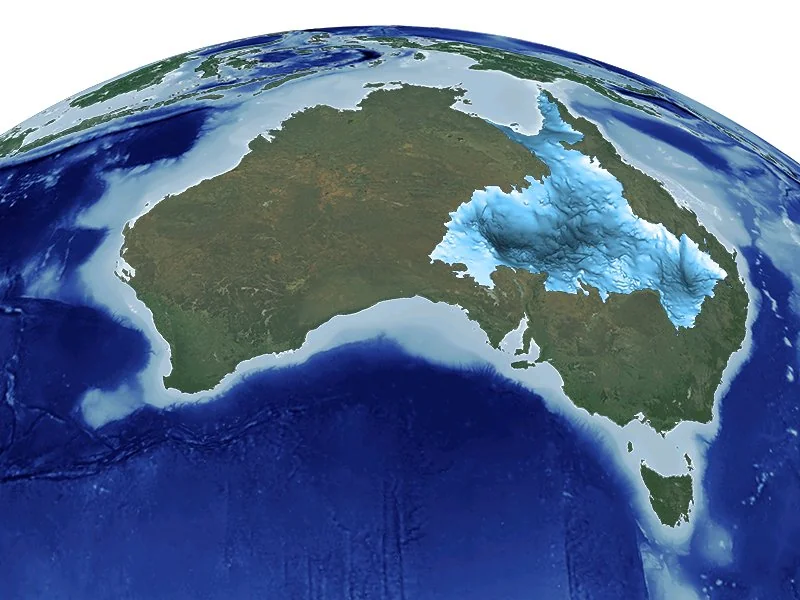
More than 200 million years old, the Great Artesian Basin is one of the world’s largest underground freshwater reservoirs. Covering almost 23% of Australia’s landmass, stretching up to 3 kilometres deep and holding an incredible 65,000 million megalitres of water, it is a true natural wonder beneath the outback.
Where the Artesian Waters Begin
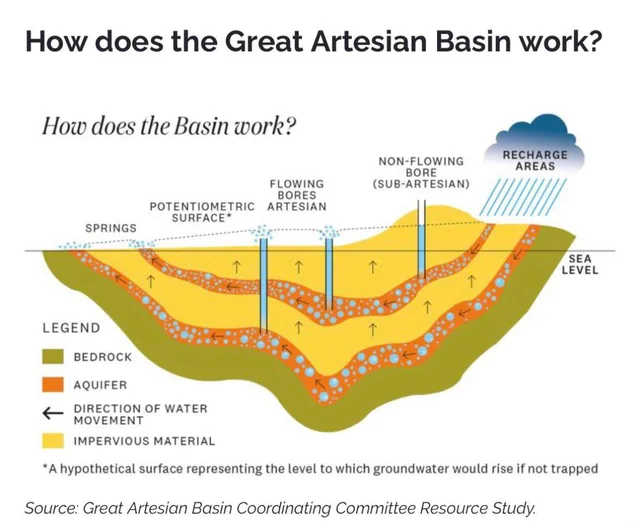
The Great Artesian Basin is one of the largest underground freshwater reservoirs in the world and a vital part of life across Outback Australia. Formed over millions of years, the basin began developing during the Triassic and Cretaceous periods when vast inland seas covered much of eastern Australia. Layers of sand, sediment and rock gradually built up over time, creating the unique underground system that exists today.
Porous sandstone layers deep beneath the earth became natural aquifers, slowly collecting and storing rainwater that filtered underground over thousands of years. Surrounding layers of dense shale and clay trapped the water under pressure, creating the remarkable artesian system that allows naturally heated mineral water to rise to the surface.
Today, the Great Artesian Basin supports communities, agriculture, wildlife and iconic hot springs experiences throughout inland Australia, including the soothing artesian waters enjoyed here in Paroo Shire.
A Hidden Giant Beneath Australia
The Great Artesian Basin stretches deep beneath the Australian landscape, ranging from around 100 metres in depth near the Bowen Basin to more than 3 kilometres deep within the Eromanga Basin. Covering an astonishing 1.7 million square kilometres — almost 23% of the entire Australian landmass — it is the largest artesian basin in the world.
The basin holds an estimated 64,900 million megalitres of water, enough to fill Sydney Harbour more than 130,000 times over. This vast underground water source has sustained outback communities, wildlife and industries for generations.
Rainfall along the edges of the basin, particularly across eastern Australia, slowly filters through layers of porous rock at a rate of just 1 to 5 metres per year. Some of this water can take up to two million years to reach the oldest parts of the basin in South West Queensland, including the Cunnamulla region.
This ancient journey is what creates the naturally pressurised artesian waters that continue to flow beneath the outback today.
Early Discovery & Use
For tens of thousands of years, Traditional Owners have known of the natural water and mud springs bubbling up from deep beneath the earth. These precious springs were vital gathering places, providing reliable water sources in the harsh outback environment.
Artefacts and oral histories reveal that natural springs were also important cultural and trading sites, where tools and plant products were made, collected and exchanged along trade routes that followed the chain of springs across inland Australia.
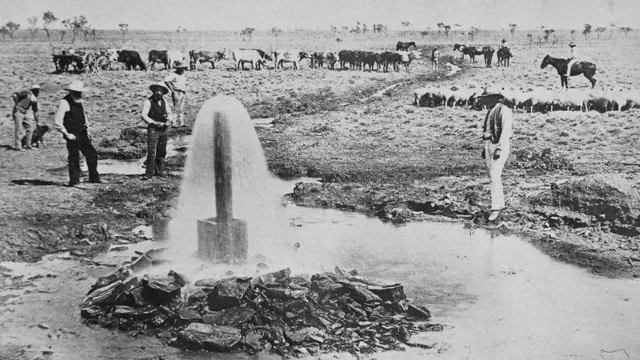
European explorers later relied on these natural springs during their journeys through the outback in the 1850s. Interest in accessing underground water eventually led to the sinking of the first artesian bore near Kallara Station, close to Bourke, in 1878.
Queensland’s first substantial artesian flows were discovered in 1886 at Noorama Station, just south of Cunnamulla, marking the beginning of a new era for settlement, agriculture and life across the region.
The Importance of the Great Artesian Basin
By 1915, more than 1,500 artesian bores had been sunk across the Great Artesian Basin, transforming life throughout Outback Australia. These bores supplied vital water for livestock, farming communities and remote settlements, while also supporting major infrastructure such as the historic Ghan Railway. Artesian water was even used to power mills and electrical generators, helping open vast areas of inland Australia to development and settlement.
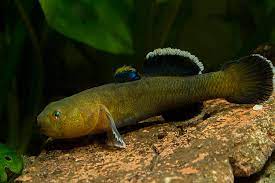
Beyond its importance to people and industry, the Great Artesian Basin also supports unique ecosystems and native wildlife found nowhere else on earth. The basin’s natural mud springs provide habitat for a range of endemic species, including the remarkable Desert Goby.
This hardy little fish can survive in extreme conditions, tolerating wide variations in temperature, salinity, oxygen levels and water quality. Even more fascinating, the Desert Goby can change colour to blend into its surroundings — one of many incredible adaptations that allow life to thrive in the Australian outback.
Protecting the Future of Artesian Water
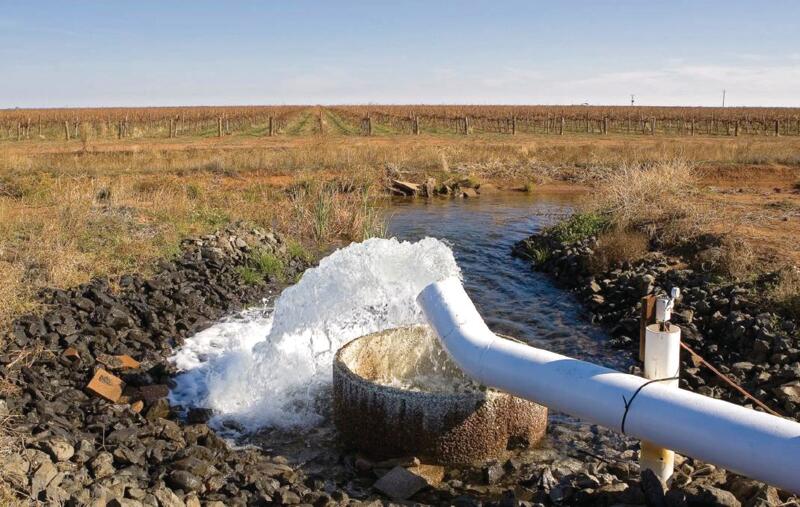
While the Great Artesian Basin transformed life in Outback Australia, early bore systems often allowed large amounts of precious water to escape through open drains and uncontrolled flows.
To address this, major rehabilitation programs began in 1952, focusing on repairing ageing bores and replacing open earthen drains with more efficient piping systems. Since then, significant progress has been made to conserve this vital natural resource.
By 2022, more than 775 bores had been rehabilitated and over 450 bores connected to piped water systems. Around 15,000 kilometres of open drains have also been decommissioned, helping save an estimated 228,000 megalitres of water. These projects have been supported through more than $243 million in combined investment from the Australian and Queensland governments, industry and landholders.
Today, ongoing conservation efforts continue to protect the basin for future generations, with the goal of ensuring all eligible stock and domestic bores are made watertight by 2032.
The Great Artesian Basin Today
Today, the Great Artesian Basin continues to be a vital lifeline for communities across inland Australia, supplying water to more than 120 towns, 7,600 businesses and approximately 180,000 people.
Recognising the importance of protecting this precious resource, the Australian Government introduced a new investment program in 2018, followed by the release of the Great Artesian Basin Strategic Management Plan in 2019. These initiatives aim to ensure the long-term sustainability of the basin for future generations.
Beyond its importance as a water source, the artesian springs have also become a significant part of Queensland’s tourism and wellness industry. Naturally heated mineral waters are renowned for their relaxing and therapeutic qualities, offering visitors the opportunity to unwind and reconnect in stunning outback settings.
Travellers can explore these unique experiences along The Wellness Way — a scenic drive trail connecting 24 artesian bathing and wellness destinations throughout Queensland, each offering its own distinctive outback experience.

Water Down Under
Take a fascinating journey beneath the surface with Water Down Under — a captivating 30-minute feature film exploring the history, significance and natural wonder of the Great Artesian Basin.
Screened on demand in the theatre at the Cunnamulla Fella Visitor Centre Historical Museum, this informative film offers visitors a deeper understanding of the ancient underground water system that has shaped life across Outback Australia for thousands of years.
Watch it here:
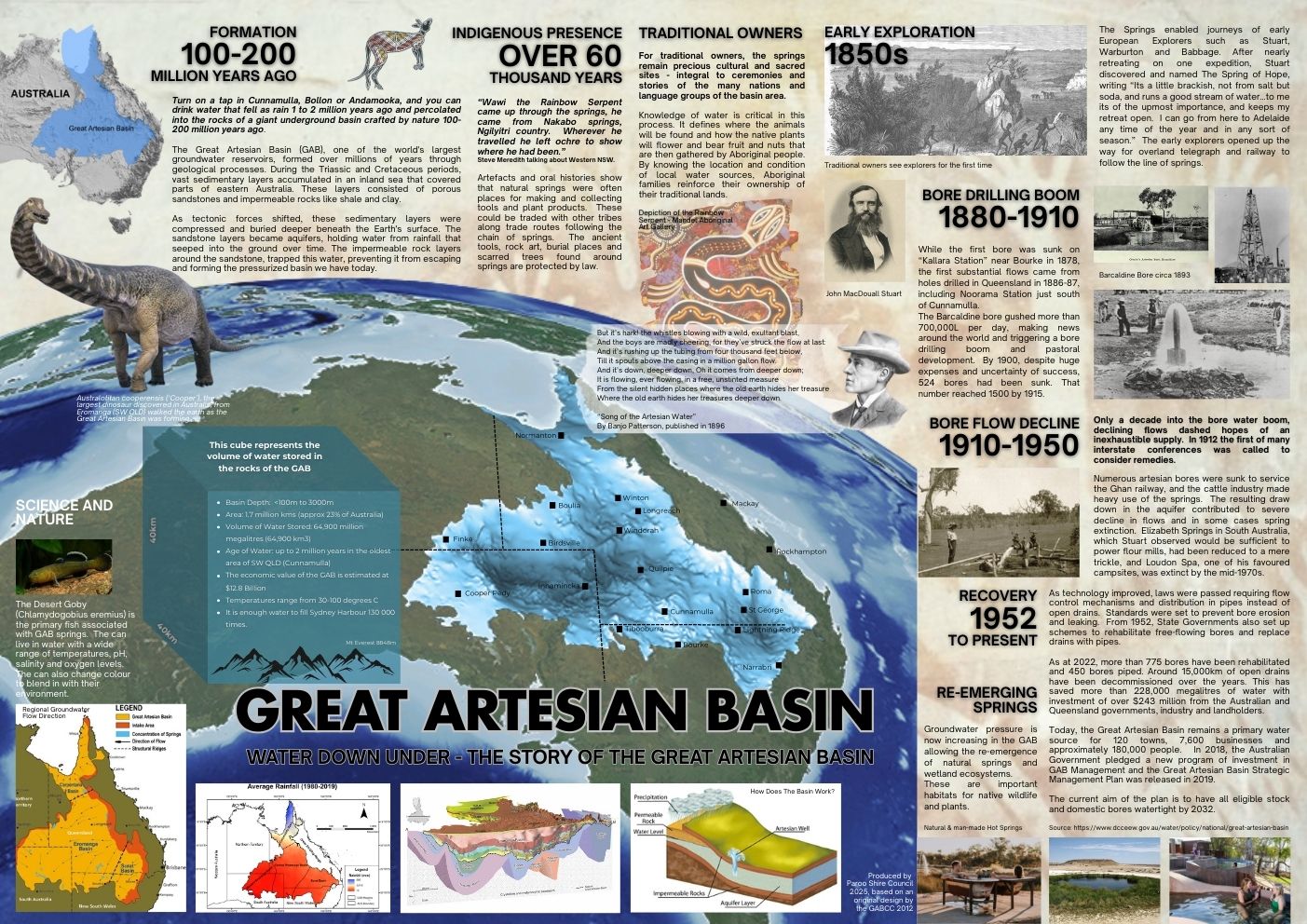
Great Artesian Basin Educational Poster
Originally inspired by the highly regarded Great Artesian Basin educational poster produced by the Great Artesian Basin Coordinating Committee in 2012, this updated edition continues the story of one of Australia’s greatest natural wonders.
After the committee ceased operations, the original poster sadly went out of print and became increasingly difficult to source. Following several years of enquiries and requests from visitors, the Cunnamulla Visitor Information Centre undertook the task of creating a brand new version in 2025 — drawing inspiration from the original design while incorporating updated facts, imagery and current information about the Great Artesian Basin.
This informative and visually engaging poster celebrates the history, science and significance of the Great Artesian Basin and makes the perfect keepsake or educational resource for anyone fascinated by Outback Australia.
A3 Posters are now available for purchase at the Cunnamulla Visitor Information Centre for $35 ea.